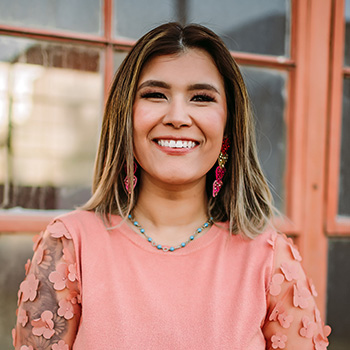
In this episode, Kayla sits down with Dr. Julieta Rubio Hobbs, founder of Lavanda Wellness, for a conversation about motherhood, holistic healing, mindfulness, cultural expectations, and what it can look like to create a life that actually feels aligned. Dr. Julieta shares how becoming a mom and building a private practice required her to rethink balance, especially as she learned how to make room for both her career goals and her role as a mother.
Kayla and Dr. Julieta talk about the importance of checking in with yourself, recognizing when something feels off, and learning to tune out the constant noise of other people’s needs and expectations. They discuss simple ways to become more present, including using water, movement, journaling, the five senses, and intentional time away from your phone to help your body and mind settle.
The conversation also explores Dr. Julieta’s holistic approach to therapy, including the role culture, family, past relationships, and generational expectations can play in mental health. She explains why healing sometimes requires more than changing thoughts and why emotions can also show up physically in the body. Kayla and Dr. Julieta discuss feeling “stuck,” nervous system responses, and how practices like tapping can be used as a mindfulness tool when fear or anxiety feels difficult to move through.
Later, they dive into gender roles, family patterns, and the challenge of creating relationships and households that may look very different from what you saw growing up. They also talk about learning to rest even when there are still chores to do, redefining “selfishness,” and choosing moments of connection, joy, and flexibility on purpose.
This episode offers a grounded look at holistic healing, motherhood, cultural identity, and the ongoing practice of building a life that feels more present, intentional, and true to you.
Helpful Link
About the Podcast Host
Thank you so much for joining me this week on today’s episode.
I love hearing about your insights and aha! moments from the show.
Kayla Nettleton is a TX-based licensed therapist, business owner, and mom of 3.
In her private practice, Kayla helps women break free from cycles of anxiety, perfectionism, and people-pleasing. Her holistic approach guides clients toward authentic, fulfilling lives by reconnecting with their intuition, setting boundaries, and building confidence.
Kayla also works with couples, especially parents balancing marriage and family. She offers both traditional couples therapy and focused intensives (6 to 18 hours) to help partners address key issues like communication, trust, and intimacy.
Through empathy and effective therapeutic tools, Kayla helps couples reconnect, thrive, and create healthier, more supportive relationships. Her practice transforms self-doubt and disconnection into growth, healing, and lasting change.
Find Kayla on
TikTok: therapy.with.kayla
YouTube: The Modern Mom’s Roadmap to Balance Podcast
Email: kayla@kaylanettleton.com
Free Consultation: Schedule a Free 20 minute therapy consultation here.
Want to hear more?
Catch up on past conversations, guest interviews, and more from the podcast.
► Click to Read the Full Episode 5 Transcript
Kayla: Thanks for joining me.
Dr. Julieta: Lillia, that How’s your morning been? It’s been good. We got off to a nice slow start, so that’s nice to have the extra time in the morning.
Kayla: Yeah, those are my favorite mornings when I feel like I have a slower start, even though most of the starts are kind of crazy with getting the kids to school. But if I have slow nests after that, that’s always nice.
Dr. Julieta: Yeah, I find it really makes a difference in like how my day goes and taking some time in the morning.
Kayla: Yeah, so before we dive in and get started, I’m going to introduce you. So this is Dr Julieta. She’s the founder of Lavanda Wellness, where she provides holistic counseling to first generation and BIPOC women navigating anxiety, relationship issues, past traumas and career stress. As a holistic therapist, she has years of experience incorporating alternative and integrative approaches to counseling, including nutritional medicine, guided meditations and energy healing approaches. As a first generation college graduate and first generation Mexican American, she takes into account the impact family, society and career slash educational goals play in our mental health. And again, thank you so much for taking the time to come and chat. So the first question that I always asked is what is your definition of a balanced life?
Dr. Julieta: Whenever I heard your question, I thought it was really interesting. Like every time I would go back to it, I almost had a different answer, and I think that’s part of the way of life of being a mom is that it is a constant balance, and so what looks balanced for me one day might not look balanced for me a different day, and I think that’s part of just having the awareness of what a balanced life looks like is that that it’s going to look different and that you just kind of roll with the punches.
But I do think at the core and at the center of having a balanced life, I think it’s really about taking care of yourself and prioritizing that. Whenever I think of motherhood, a lot of that is about, like, nurturing others, taking care of others, and so I think part of having a balanced life as a mother is making sure that we’re also finding ways to take care of ourselves and nurture ourselves.
Kayla: Yeah, it’s often forgotten or put on the back burner for too long, and then I think that’s kind of when moms start to have that feeling of losing themselves or forgetting who they were, or who they were before they became a mom is when they forget to do the things that bring them joy and taking care of themselves.
Dr. Julieta: Yeah, it can be easy to get lost in the new role and finding your new footing through the transition.
Kayla: Yeah, and how has your experience been being a mom and then also being a private practice owner, a therapist?
Dr. Julieta: It was a big learning experience for me, and they all had like their own different learning curves, and I just have one daughter, she’s about to be four. So I do feel that came naturally in some ways in terms of like how I kind of had an idea of what I wanted to be as a mom and like how I saw myself in that role.
I think the balancing act was more like how do I incorporate my career, how does that fit in with my new role of being a mom? And so that was where it was a lot more interesting as I shifted into private practice of learning this whole other business and making sure that I wasn’t letting go of one more than the other.
Kayla: Yeah, how were you able to make sure that you weren’t letting go of one or the other? What helped you to do that? Or to recognize, maybe, when things were starting to slip in the direction that you didn’t really want it to take?
Dr. Julieta: I think it takes a lot of reflecting and checking in with myself of how am I feeling about my role as a mom or how am I feeling in my role as, like my career being a businesswoman and having goals, at least on the career side, that I can use as like, okay, am I on track with my goals, am I happy with how things are?
And so it’s really just doing a lot of check in, a lot of reflecting and, if something feels off or I want to do more of this figuring out how I can close that gap a little bit. So I think part of big thing has been asking for help, like knowing one too, or support, recognizing that I can’t do it all, that it’s unrealistic for me to be like everywhere at once and like being okay with letting certain things go and asking my partner to step in in certain areas.
Kayla: Yeah, because you’re right. It is impossible to do everything and to be everywhere at once. You mentioned that you would do check-ins with yourself to see if things feel off. I’ve noticed in my work with moms that it’s really hard for them to trust themselves and to be present. Can you talk more about that, what that check-in looks for you and how you were able to be present?
Dr. Julieta: Yeah, that’s a really good question because whenever we start reflecting and thinking, a lot of times we start thinking about other people and what they might think Like what are their needs? Am I meeting their needs? Versus just being centered with yourself and your needs? So part of that is learning how to quiet all those other thoughts that are considering external factors.
I really like to do my reflections during showers because I find water really soothing and calming and it gets you into more like a mindfulness space or like meditative state, and so whenever I’m struggling with something that’s my me time, it kind of almost zones everything out with the sound of the water and just like being present with myself and having those moments of reflection.
Kayla: Yeah, I totally know what you mean. I’ve heard many people where water is really soothing and helpful for them not just being around bodies of water Because I think sometimes we limit ourselves in thinking well, I want to be around water and all we can think of is maybe an ocean or a lake that has this like beautiful, serene background, but in reality that’s not always accessible for us.
So how can we incorporate water into our life? And most of us take regular showers, either a few times a week or daily, so we are around water more than we recognize or realize or give credit to.
Dr. Julieta: Yeah, I mean even washing the dishes. I’ve had moments where I’m washing the dishes and I feel calm and I feel creative and start tuning into those parts of myself that feel just really grounded and centered, and so I guess, like paying attention to those moments and slowing down is really helpful.
Kayla: Yeah, and so how, if someone is struggling to be in the moment and get there because there are just so many other things that they are focusing on and trying to remember what would be helpful to help moms learn to be present?
Dr. Julieta: Yeah, I think it’s important to be aware of your energy level. I find that whenever somebody is struggling with being present because doing meditation can be hard to just sit still and quiet all the thoughts. And so what I find helpful is recognizing where your energy level is at.
If you are at a higher energy level, if there’s a lot of thoughts going around in your mind and like how can you release some of that energy so that there is more stillness, and so sometimes it’s about doing more yoga, exercise, walking. Those are really more like easy ways of releasing some of that excess energy, and sometimes it’s physically releasing energy.
You can also do it even just by writing, just jotting down whatever thoughts are in your head. So finding those outlets to physically let go of that tension, and then practicing the mindfulness piece, would say also incorporating the senses is also really helpful in helping myself get present. So I always like to use the five senses grounding technique. So tuning into what am I seeing, what do I feel, what do I hear, and practicing living in our body and our senses, versus just in our mind and our thoughts.
Kayla: Yeah, that’s really helpful. It can be really easy to just live in our thoughts and in our mind when it’s our entire body that can help us be grounded and find that balance that we need. And I love that you had mentioned the term energy. Sometimes we have too much energy, but I think sometimes we believe, when we’re feeling this way, we don’t have enough energy, but it’s recognizing we need to release some of this and figuring out what’s going to work best for us in releasing that energy so we are in a better state, in a state where we want to be.
Dr. Julieta: Yeah, I definitely agree with that. It’s interesting how it shows up to with the motherhood piece, and I imagine that that’s probably different for everyone. I’m kind of curious how it shows up for you too, but for me it’s whenever I’m too stressed about something like work related. I have stuff on the back burner that I haven’t been able to get to, but I’m not on the clock, I’m with my child, so in the back you have all these thoughts running of all the things you should be doing, but then you’re not enjoying that moment, and so you end up frustrated, or your child catches on that you’re not really present, you’re not really there, and so they might let you know in their own way.
But I think that’s like an energy piece to have like okay, my energy is also elsewhere, and so finding ways to let go of that, knowing that you can come back to it later, yeah, practice in time.
Kayla: I when you said your child’s going to let you know that they’re in their own way. I laugh because my middle child, she is very vocal and she’s very aware when you are not paying attention. So she’ll even like, move my face. And she’s three, she’ll be four in February, but she’ll move my face like mommy. I’m talking to you, mommy, and she’ll see that I’m like maybe elsewhere, I’m looking at my phone or something. She’s like mommy, I’m trying to tell you this or I’m trying to show you this.
And so in my, my younger one, the baby, he is doing the same things. If I’m carrying him and like my arm and I’m maybe looking in another direction, he’ll physically move my face to look at you and go mommy, mommy, mommy, and like in the moment.
It sometimes can be annoying but I try and you know this is their only way of getting my attention.
They haven’t figured out another way or they’re still learning to call and wait and be patient, because sometimes, even adults, I’m struggling with patients. But one thing that has helped me to be present with my kids, when that’s actually what I’m trying to do, is setting that intention before going into it, letting myself know this is time that I’m taking out to be present with my kids and to play with them, or whatever we’re doing in that moment whether it’s we’re going to dinner together or that we’re trying to do something where we’re engaging everybody I like tell myself this is the time for for this, and all the other things can set aside for later, because they’re always going to be there.
There’s always going to be things that need to get done, and sometimes I even have to maybe put my phone somewhere else so that I’m not distracted by that either, because the phone is really distracting, especially when you’re trying to do things on social media for marketing purposes or for engagement and things like that.
Dr. Julieta: Yeah, I I agree. The phone is a huge distraction for us as adults, with kids, and it makes such a huge difference to just put it aside or in a different room and having those check ins of like, okay, do I really need to look at my phone? Is there anything immediate that needs my attention? And more often not, it’s. It’s usually something that can wait and that really allows us to be more present and grounded in those moments.
Kayla: Yeah, I always tell myself, If it’s a real emergency, someone actually needs to get ahold of me. They’re going to call me two times in a row. If it’s not two times in a row, then it’s going to wait. They can wait. This is not something that’s urgent or immediate. So specialize in working holistically with your clients. Can you talk more about what that looks like?
Dr. Julieta: So that’s for me. It’s there’s two different pieces to the holistic component. I specialize working with Latina women, and so the first part of it is more externally, looking at the person holistically, and so how is culture and society playing a role in your well-being, or how have your past experiences or relationships impacted you? And so looking at all those different pieces of how you interact as a person to those external factors and what role are they playing in your life and that can help us get a better idea of like some of the values and beliefs that are guiding them.
And so sometimes we pick up certain values or thoughts from these experiences that we have, and that’s where we do more of like the internal work in terms of the internal holistic component of mind, body, spirit, and so for that piece I like to incorporate both mind and body, because a lot of the times in counseling we focus on the thought component and helping you understand your thoughts better and helping you change those negative thought patterns.
So I still do that, but then I also like to take it a step further and helping them gain more awareness of themselves as a person, tuning into themselves more to their body and what messages their body is also telling them, because our emotions are a very physical experience as well, whether it’s tension or that nervous stomach feeling, and so helping you understand yourself more in that aspect.
And then the energy work piece that I do is kind of in the same realm of tuning into your body, tuning into your energy. Our body has a memory as well, so if there’s an experience or a thought that feels very strongly for you, it might be harder to change just by looking at our mind, and we have to go a little bit deeper than that and and help kind of like re-probe our mind and body to let go some of those negative patterns that feel more stuck in our body.
Kayla: I like that you used the term stuck, because there are things that do keep us stuck from maybe moving forward or taking steps that we’ve been trying to take to change some of those patterns that we keep falling into.
Dr. Julieta: Yeah, I think whenever it comes to healing certain wounds we can again from the mind perspective. We can kind of reframe those pieces for us and be able to maybe talk about them or manage our lives better. But then our body might not feel safe. Like to our body. Those wounds are still very real and scary, and so that’s where that stuck piece is, and with the more holistic approach it helps tune into that component and heal those parts that are a little bit harder to, maybe aren’t as tangible.
Kayla: Yeah, that brings to mind a lot of clients that I’ve worked with in the past. Like one of their struggles was, they would say, I cognitively know that I am safe and I can tell myself I’m safe, but my body is doing these things and it’s making it’s feeling this way, and what I found is part of it is we haven’t given ourselves the opportunity to sit with certain feelings and we’re so used to pushing certain feelings away that when we start to feel uncomfortable, we’re getting scared because we’re thinking that this isn’t okay and even just recognizing not every emotion is going to be comfortable, but you’re going to get through it and it’s going to be okay. Your body is just feeling a certain thing, not not necessarily like you’re going to be okay, but accepting that this is a feeling that you have and sitting with that.
Dr. Julieta: That it’s okay to be scared, like validating our own selves instead of dismissing and trying to say it’s okay when it doesn’t feel okay.
Kayla: Yeah, and I know you do work with tapping. Can you talk more about that and how that’s helpful, or even if you have maybe a technique that can be easily used by someone?
Dr. Julieta: listening today. So for those of you that don’t know, like tapping is based in Chinese medicine, and so it’s based on the meridian system. So just like acupuncture, and it’s basically some people call it acupressure for your emotions, and so you just use your fingers to put pressure on certain points, and one that I really like is under the collarbone. If you follow each collarbone all the way towards the center where they almost meet, and then you go down just a pinch, just like one finger, there’s a little indention there and that is for your kidneys.
Kayla: Oh, okay.
Dr. Julieta: So all of these points are connected to your organs, and your organs are connected to emotions. So this is for fear, and so you can either tap there or you can just put gentle pressure there, and whenever you’re feeling anxious or scared, worried about something, just tapping there and taking some deep breaths.
It’s going to be a good mindfulness practice, too, of just bringing your attention to your breathing, focusing on the tapping, and it’ll be relaxing. You should feel relaxed after doing this for a little bit, and it’s also calms down that fight or flight response as well. It’s something easy that you can do. You can even be conspicuous, like if you just have one hand on one point and putting pressure there, I find that I naturally do this sometimes and I think my body just like learns and almost like muscle memory, just naturally puts my hand over those points.
And that’s a great thing about. As we practice these things like mindfulness, meditation the more you do it, the more that your body naturally knows like oh, this makes me feel better, I need to do this or just take a moment to myself and breathe.
Kayla: How long do you think someone would have to do that for it to feel effective? Is one minute enough? Is there a time frame that is most helpful?
Dr. Julieta: I would say two minutes would be a good time frame to keep for yourself. It might also just depend on what you’re tapping on or what you’re trying to release. Some things are going to be heavier and are going to need more tapping rounds than something that might just be smaller in the moment.
But that might give you also an idea of like, oh okay, like there’s something more here that maybe I need help tapping through it, and that might be another thing. If it’s not working for you, is there something that’s holding you back from being able to find that piece? Going back to that component of my stuck? Is there something else that’s keeping me from letting go of this worry?
Kayla: Yeah, because if there is something that you feel is holding you back or you’re feeling stuck or unable to move forward, it’s usually something and sometimes, even if you can’t pinpoint it, working with it there because it’s going to be able to help you figure that out.
Dr. Julieta: Yeah, sometimes you need kind of like that sounding board to help you dig a little deeper and maybe hear something that you haven’t tuned into but that your body knows is real for it.
Kayla: Yeah, and then someone to ask the right questions and to get you to explore areas maybe that you’re not willing but haven’t even thought of, or maybe nervous to explore on your own.
Dr. Julieta: Yes, yeah, I mean, we are so in our life that sometimes it’s hard to see all the pieces, and so having a therapist almost gives you like this zoomed out view of all the moving parts, and so they can help you make those connections or notice connections that are there that you didn’t realize.
Kayla: Yeah, it makes me think of someone I was recently working with that there was a like a back connection from when they were younger that they didn’t feel heard as a child and so this was getting in the way of their relationships because they weren’t speaking up. But they had this underlying belief that if I speak up I’m not going to get heard. But they couldn’t figure out what stopped them from speaking up as an adult until we dove into past family patterns. They’re like, oh my gosh, I didn’t feel heard as a kid and that’s really impacting me. I didn’t ever make that connection. I wouldn’t have been able to get there on my own.
Dr. Julieta: Yeah, I feel like there’s even like kind of going back to the cultural component, like we don’t realize how much, or our parents, you know, like they say certain things about maybe what a relationship should look like, or like the gender roles, or being frustrated about taking on more than the other partner, and so like we carry that over into our relationships and sometimes we don’t recognize that it’s not really about my partner, it’s about my dad or my mom and the way that their relationship was. That’s actually now showing up in my relationship and so helping recognize those patterns that we’re not aware of or those thoughts.
Kayla: Yeah, and not even just what’s being told to us about how relationships should be or what a healthy relationship looks like, but even what we saw in the relationships that were around us growing up. All of those unsaid things right, Because that’s what we’ve spoken about most. Yeah, all the unspoken rules. Well, I saw my caregiver dealing with that, so I just thought that that was something that I should deal with too.
Dr. Julieta: Yeah.
Kayla: Was that something that you found to struggle with? Becoming a mom and figuring out the different roles? Did any of your background come into play? I know mine did. I wanted things to be more balanced and trying to figure that out was hard because my mom did a lot of like the cooking and the cleaning, but they both worked and I didn’t want to be the only one right Doing the cooking and the cleaning. And trying to figure out how to balance and how to have those conversations was tough and we’re still trying to figure it out. We don’t have it perfect. There are moments when things are more balanced and, of course, you go through seasons when one person is busier maybe than the other. There’s more going on, but I think it’s always like a conversation that needs to be had.
Dr. Julieta: Yeah, I agree, I feel like that is definitely one of those learning curve things for me and probably for a lot of other. Moms of like, my parents were very traditional with gender roles and my mom was the primary caregiver, even though she did end up working whenever we were a little bit older, and so that was my example of what it looks like to be in a partnership. But I was also raised to get an education and have a career and be able to be independent and be on my own. So you have these two very like. What you’re teaching me is different from what you’re showing me, and so my brain then had to like find like, okay, wait, how do I do this? Which way do I go?
And so for my first half, you know, I just focused on school, getting my education, and that was my tunnel vision.
And then, once we were talking about having a family, then that’s where it’s like okay, well, how is this going to look like now? Because what I was shown growing up was being complete traditional gender roles, but that no longer fit with my education, career type values that were also instilled, and so it was definitely having to kind of create a new meaning for myself and what I wanted that to look like, and same thing for my partner. His parents were also pretty traditional, but he also wanted an equal, essentially like in terms of career and like both of us working, both of us doing our thing. That’s something that was important. So I think for him it was also having to like oh well, how do we do both? Can we do both? Yeah, so yeah, it’s kind of like whenever you create new traditions for holidays and stuff. It’s kind of like that, but on a different level of creating like these new traditions and roles of like how do we want to manage our household?
Kayla: Yeah, and then if we’re comparing this to starting a new holiday tradition, there’s always things that end up being changed, or you liking better, or you know adding and like oh well, let me tweak it this way. Or oh, I love doing it like this this year, let’s you know, let’s add that to it. Right, it’s always evolving, yeah, yeah, and I think that really highlights the importance of being flexible and open in this season of life.
Dr. Julieta: Yeah, definitely, I feel like it’s just a whole different generation and like being open to change in that and being flexible with that of just kind of growing and adapting as we go.
Kayla: Oh yeah, because a lot of us are trying to live our life in a way that we’ve never seen and we’ve never been modeled, so we’re almost starting from scratch. And doing that on top of raising kids in a different way is challenging, because we’re going against these habits and traditions that have been passed down for a really long time.
Dr. Julieta: Yeah, as we’re being trendsetters.
Kayla: I never thought of it that way, but yeah, it’s not easy at all.
Dr. Julieta: Yeah, there’s definitely those moments that are very rewarding and nice of just enjoying. When you have those moments of balance and really just taking it in, that like I am able to be present and enjoy my life with my family, my kids, and then like work is good and I feel accomplished there and happy with the work that I do, I think it’s really important to take in those moments fully and almost kind of take a mental picture of those times when things feel right.
Kayla: Being present in those moments and remembering what about those moments is important to you.
We always kind of have our values or our why for life in the back of our mind. I think it can help us be more present. For me, as someone who has their own business and works from home, I don’t have to be working every minute of the day, and so for an example that I do is I tell myself part of the reason why I wanted my own business is to feel the sense of freedom and flexibility. So I’ll tell myself how can I feel this freedom and flexibility today? What can I do? Does that mean I stop for 30 minutes and watch a show? Or do I stop and go take a walk? Because maybe in a regular desk job or a regular agency job I wouldn’t be able to have that freedom and flexibility to do that in the middle of the day.
Dr. Julieta: Yes, I do something similar and checking in with my values and my goals, like, am I aligned with how I envision my life? And part of that is just having those moments of being relaxed, calm in the moment, feeling rested and so being intentional of right now I don’t have work, my stuff is taken care of, I don’t need to clean, and just relaxing and really being intentional with my time off and then even taking it a step further, of challenging myself to take time for myself whenever maybe there is something to clean up or chore to do, and it’s like you know what. That can wait. I’m going to rest right now or I’m just going to play with my daughter right now. And yeah, sometimes people call it being selfish, but I feel like that’s almost putting a negative connotation.
It’s just doing something for yourself or just going back to what I mentioned earlier, like nurturing yourself and caring for yourself, and so, yeah, definitely being intentional with that piece.
Kayla: Yeah, and recognizing that it takes practice to do that and to finally get to a place where you’re comfortable not picking up those toys on the floor and choosing to sit down and take a break for yourself or do something for yourself that brings you joy, or whatever it is that you’re looking for in that moment. Right, it takes practice to do that, and the first time you do it it’s probably going to be uncomfortable and you might have this icky feeling within you, but it does get easier.
Dr. Julieta: Yeah, before you know it, you’ll be watching romantic comedies every weekend just because it’s your thing.
Kayla: Oh yeah, I actually did that last weekend. It was so nice. There was two romantic comedies that came out on Netflix kind of close together, and I watched both of them last weekend. So that was really nice. But we are running out of time and I wanted to give you the opportunity to talk more about your own practice. I know you’re in San Antonio, texas, so if anyone in the Texas area wants to work with you, how would they go about doing that?
Dr. Julieta: Yeah, so I offer a free phone consultation and you can schedule that on my website, levandowellnesscom, and so we can chat and see what your goals are and see if it feels like a good fit for you. My services are 100% virtual. They’re through video sessions, so regardless of where you are in Texas, we can schedule a time to talk and, like I mentioned, I focus working with the Latino community and I love incorporating that holistic approach to helping you with your goals.
I also have a free wellness planner that is from a holistic approach and you can download that on my website as well.
Kayla: And we’ll also be putting. We’ll get this contact information and the journal. We’ll link that up in the show notes along with her website and contact information. Thank you so much for taking the time, al. I know we had some scheduling transitions, but I’m so glad that we were finally able to figure it out so that we could have you on Thank you. But I hope you have a great rest of your day and a good weekend.
Dr. Julieta: Thank you too.
 Apple Podcast